On May 13, 2025 a slow-moving rainfall event caused flash flooding conditions in western Allegany County, where flooding occurred in both the Braddock Run and Georges Creek tributaries to the North Branch of the Potomac River. In this area of the County, Frostburg observed the highest amount of total rainfall in the month of May in 2025 (13.88” May 2025) the area had in the past 25 years (5.86” average May 2000-2025).
On May 13, 2025 a slow-moving rainfall event caused flash flooding conditions in western Allegany County, where flooding occurred in both the Braddock Run and Georges Creek tributaries to the North Branch of the Potomac River. In this area of the County, Frostburg observed the highest amount of total rainfall in the month of May in 2025 (13.88” May 2025) the area had in the past 25 years (5.86” average May 2000-2025).
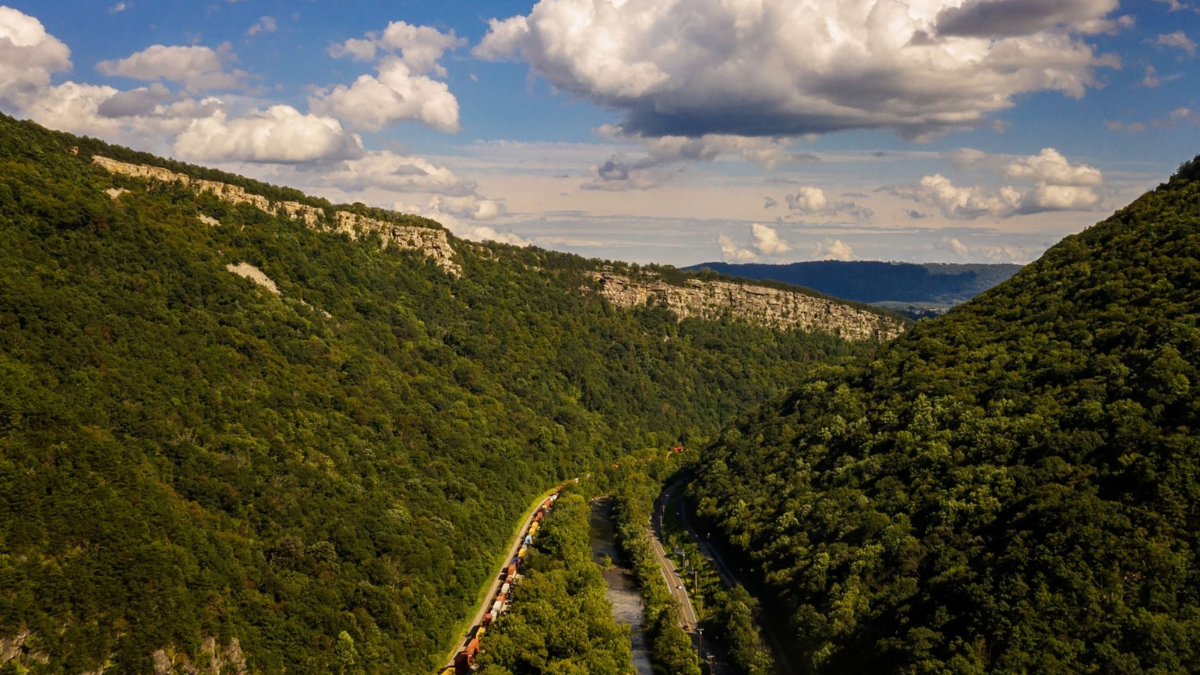
On May 13, 2025 a slow-moving rainfall event caused flash flooding conditions in western Allegany County, where flooding occurred in both the Braddock Run and Georges Creek tributaries to the North Branch of the Potomac River. In this area of the County, Frostburg observed the highest amount of total rainfall in the month of May in 2025 (13.88” May 2025) the area had in the past 25 years (5.86” average May 2000-2025). 1
On Wednesday, May 13, 2025 3.5” to 5.5” inches of rainfall were observed in the western portion of Allegany County. Georges Creek, near Franklin/ Brophytown (north of Westernport, south of Barton), reached major flood stage and crested at 14.1’ 2 , which exceeded the 1996 crest of 12.77’ on September 6, 1996. 3
The rainfall event began during the day, and the National Weather Service issued a flash flood emergency alert in the early afternoon. While there were no reported injuries or fatalities during the active flood event 4 , Westernport Elementary was surrounded by flood waters and students, staff, and faculty were evacuated by boat by first responders from Maryland and West Viriginia. It is estimated that 200-300 homes were impacted as well as several businesses, especially those in downtown Westernport. Water and sewer infrastructure, and roads and bridges sustained significant damage, concentrated largely between Lonaconing and Westernport.
Following a series of significant flooding events that occurred in 1996, a report was prepared by the ‘Governor’s Flood Mitigation Task Force for Western Maryland’, under the leadership of Maryland Speaker of the House Casper Taylor. Following this model, Governor Wes Moore, Senator Mike McKay, and Del. Jim Hinebaugh identified the need to develop a new report specific to the Georges Creek watershed. The objective of the Georges Creek Task Force, under the leadership of Senator McKay, is to succinctly identify actions that can be supported by the State of Maryland to mitigate the impacts of future flooding, through policy and/or legislative changes, as well as funding needs.
The Georges Creek valley and the communities along the creek have a deep history rooted in coal mining at the settlers that came to mine the hills, and more recently the paper mill that operated just above the confluence of the North Branch Potomac River and Georges Creek The sense of place and community still runs strong, despite the decline in coal mining and the closure of the paper mill. Like other areas of rural Appalachia, with the decline in industry, the other socioeconomic indicators associated with high unemployment rates have followed. As this flood affected hundreds of homes and numerous businesses and community/emergency service providers, is this an opportunity to not only to strengthen the damaged infrastructure but also the communities themselves? There is a strong sense of place and roots in Georges Creek, providing opportunities for the residents to stay in their communities and experience both economic and disaster resilience is essential.
The Georges Creek Task Force Executive Committee is comprised of Gov. Wes Moore; Senator Mike McKay; Del. Jim Hinebaugh; Jack Coburn, Mayor of Lonaconing; Scott Shoemaker, Superintendent, Upper Potomac River Commission; John Kirby; and Bill Valentine. Several sub committees were established to make recommendations and identify actions to be included in the report. These sub committees are comprised of members representing various perspectives including elected and appointed officials, stakeholders, and subject matter experts. Staff from Tri County Council for Western Maryland have prepared the report under direction from the Executive Committee. The recommendations from the subcommittees and key appointed officials are set forth below.
a. The Initial FEMA/MDEM damage assessment found the recovery costs would be more than $15.8M. After the initial denial of a major disaster declaration, a follow-up damage assessment was conducted by FEMA, with recovery costs estimated to exceed $33.7M, which is about 3 times Maryland’s threshold for federal assistance.
i. Recommendation: The State of Maryland’s Rainy Day fund should be used to replace the funding that would have otherwise been provided through FEMA, should a major disaster have been declared (damage assessment documentation available).
a. FEMA agents were not knowledgeable regarding infrastructure and took time away from local officials working to respond.
i. Recommendation: FEMA agents should ensure more experienced and trained damage assessment team members.
a. State Disaster Relief Funds – state funds, locally administered.
i. The funding in place has been instrumental in assisting families that did not qualify for other assistance programs to replace appliances, furnaces, building supplies, vehicle insurance deductibles, or vehicle downpayments.
ii. Recommendation: The local government administering the grant funds should establish program parameters in alignment with state law and be responsible for processing all grant awards. Therefore, the local governments should be the lead agency in developing all messaging around the grant funds. (There was confusion about eligible applicants due to both State and County messaging that conflicted, causing issues for County grant administrators). Introduce Bill and/or include in Budget language.
b. VOAD – Voluntary Organizations Active in Disaster.
i. VOAD “is a coalition of 70+ of the nation’s most reputable national organizations (faith-based, community-based and other non-profit organizations) and 56 State/Territory VOADs, which represent Local/Regional VOADs and hundreds of other member organizations throughout the country.” [1]
In the instance of Allegany County, resources are not readily available to financially support VOAD operations in FY 26, which may in turn affect VOAD’s efficacy in recovery efforts.
ii. Recommendation: It has been indicated that VOAD has been and will be the State of Maryland’s preferred Long Term Recovery partner; if so, a funding mechanism should be in place to support VOAD in deploying resources to the disaster-affected areas for the recovery period (1–3 Years). Budget language.
a. Flood Buyout Program.
Reestablish active program to purchase homes in mapped floodplain and/or flooding was documented during recent storm. Allegany County managed a very successful Flood Buyout program following the 1996 flooding through the early 2000s. Hundreds of homes in the floodplain were acquired and demolished.
i. Recommendation: Voluntary Flood Buyout Program:
ii. Recommendation: Flood hazard mitigation should include funding to better floodproof critical public infrastructure or relocate out of the floodplain, including emergency services stations.
There are several dams upstream of Westernport on tributaries to the North Branch Potomac River. Operating the floodgates at any or all these dams may cause flooding not only on the Potomac but on Georges Creeks as well.
a. Cooperation and frequent/clear communication are essential during a crisis.
b. Various entities are involved in the management of the dams, including Mount Storm Dam – Dominion Energy; Jennings Randolph Lake (Bloomington Dam) – Army Corps of Engineers; and Savage River Reservoir – Upper Potomac River Commission.
i. Recommendation: Explore the opportunity to communicate scheduled dam releases between various jurisdictions and establish protocol regarding dam releases, including during or following heavy rain events. Leverage existing relationship of existing Tri-State legislative meetings.
a. The Incident Command Structure (ICS) used by the emergency responders worked successfully. Due to the magnitude of the incident, the response required officials beyond emergency responders. Familiarity with the National Incident Management System (NIMS) and the ICS by elected officials and certain public sector personnel would benefit all parties during the initial response to the disaster. (NIMS is a result of recommendations arising from 9/11).
i. Recommendation: Provide high-level training developed for those who are not first responders to elected and appointed officials once every 2 years in Western Maryland. (Tri County Council and/or MML, where appropriate, would be an appropriate entity to coordinate with MDEM for training). Budget language.
a. By law, the County updates the HMP every five (5) years. The HMP is a comprehensive, long-term strategy documenting a community’s efforts to identify risks and vulnerabilities from potential hazards (like natural disasters) and outline actions to reduce or eliminate the long-term impacts of future hazard events on people and property. These plans aim to break the cycle of repeated damage and recovery by integrating mitigation efforts into community planning and development, leading to increased resilience and reduced future costs.
i. Recommendation: Target certain State/Federal funds for mitigation projects which may include buyouts and relocation of infrastructure. Budget language.
ii. All municipalities shall participate and be actively involved in the development of the HMP. Resiliency planning/mitigation and recovery efforts are a responsibility of the municipal government, so their involvement is critical.
a. Much of the flooding was attributed to, or exacerbated by, deposition in the stream channel and/or trees in or encroaching on the floodway.
i. Recommendation: Annual funding allocation to Allegany County for maintenance of Georges Creek and its tributaries. Budget language.
b. Permitting through MDE makes much needed maintenance of the stream channel overly cumbersome. The agency prioritizes streams and habitats over legitimate concerns of the people living adjacent to the waterways.
i. Recommendation: Allow decisions related to stream maintenance to be made on a local (County government) level following best management practices to the maximum extent possible, where risk to person’s property and wellbeing is considered in addition to the environment.
c. Army Corps of Engineers.
i. Recommendation: The services made available by the Army Corps of Engineers, including a hydraulic study and additional hydraulic work in Georges Creek, would be very helpful for understanding which work could and should be done to reduce future flooding impacts. A 0% cost share by Allegany County is necessary due to funds already spent on flood clean-up and recovery by the County. [This study is underway, per Roger Bennett] Letter of support from Delegation.
a. Water infrastructure operated by Lonaconing and Westernport were damaged as part of the flooding, causing water systems failure during and immediately after the storm. Sewer infrastructure owned by Allegany County and Westernport was also damaged during the storm and remains vulnerable. Lack of water and failure in sewer lines are both public health emergencies.
i. Recommendation: Funding to bolster water distribution and sewage collection systems to reduce future damages from flooding events.
ii. Recommendation: Updating Wastewater Infrastructure to utilize the Upper Potomac River Commission/Westernport’s wastewater treatment plant would help eliminate environmental impacts throughout Allegany County during future flood events. Providing funding for infrastructure to utilize the Major Industrial wastewater treatment plant left behind by VERSO paper would not only minimize environmental impacts but also bolster economic development opportunities in the Region as well. The Maryland Department of the Environment is in agreement with this recommendation for the Region, funding would also be at 0% cost share by Allegany County due to the impact from this most recent flood event. Budget language and explore funding solutions with MDE.
b. Roads and bridges sustained significant damage due to the flash flooding.
i. Recommendation: Funding for improvements to County and municipal roads and bridges and the respective waterway.
ii. Recommendation: Railroad bridges affected hydraulics and caused localized flooding to properties that otherwise should not be flooded. Long-term planning for the future of the railroad should include a cost-benefit analysis. Consideration of raising railroad bridges must be completed if the analysis indicates that the railroad remains. Explore options with MDOT/MTA.
Every 2 years, the Western Maryland delegation should report to County Commissioners on progress and seek to address new concerns or needs related to potential flood mitigation.
Draft – Updated 10/27/25
This document is not an after-action report nor is it intended to identify areas for improvement in future response efforts (immediate or long term). Rather, the purpose of this document is to identify actions that should be taken by state leadership to assist with mitigating the severity of flooding and/or recovery from flooding in Georges Creek or potentially statewide.
View the full report here.